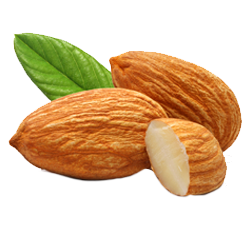

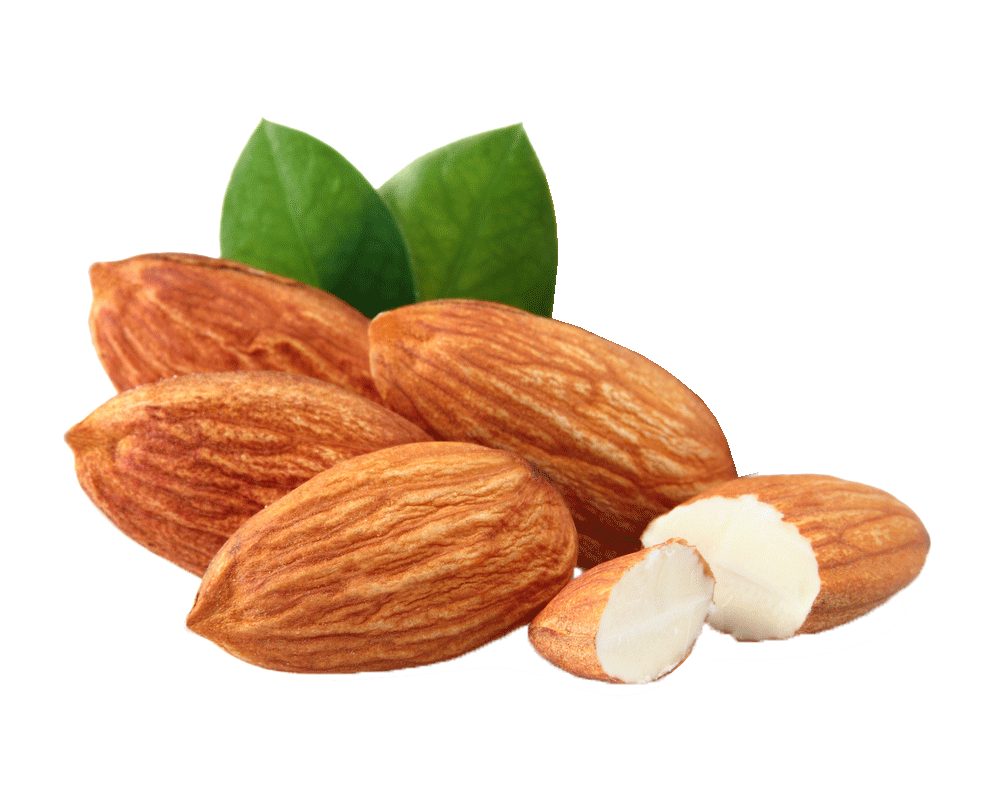
The word “Almond” comes from old French “almande or allemande” late Latin “amandula”. The Almond is a species of tree native to the Middle East and South Asia. Almond is also the name of the edible and widely cultivated seed of this tree. The fruit of the Almond is a drupe, consisting of an outer hull and a hard shell with the seed (which is not a true nut) inside. Shelling Almonds refers to removing the shell to reveal the seed.
Almonds are sold shelled (i.e., after the shells are removed), or unshelled (i.e., with the shells still attached). Blanched Almonds are shelled Almonds that have been treated with hot water to soften the seedcoat, which is then removed to reveal the white embryo.
The Almond is native to the Mediterranean climate region of the Middle East, eastward as far as the Indus. It was spread by humans in ancient times along the shores of the Mediterranean into Northern Africa and Southern Europe and more recently transported to other parts of the World, notably California, United States.